
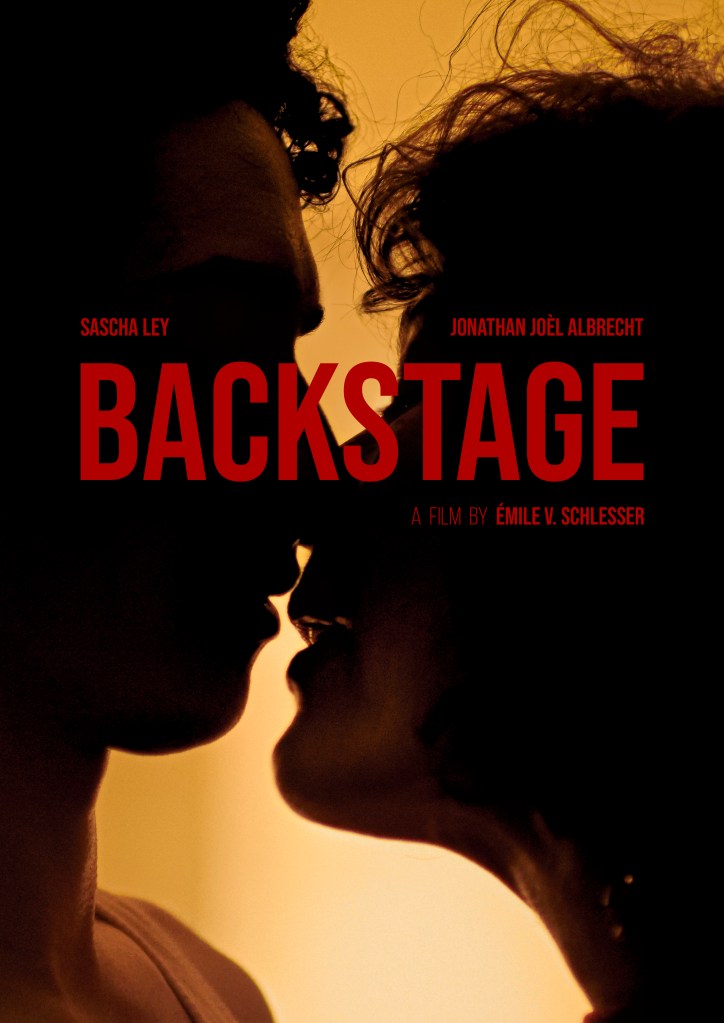
Drama
Director: Émile V. Schlesser
Producer: Émile V. Schlesser, Fabien Colas
Cast: Jonathan Joèl Albrecht, Sascha Ley, Tommy Schlesser, Jil Devresse
Cinematographer: Thorsten Robert Harms
How can a film called Backstage unravel the curtains behind abuse without an apology?
Constant experience shows us that every man invested with power is apt to abuse it: he pushes on until he comes to the utmost limit. – Charles Lewis de Secondat
Lukas plays the male lead in the theatre. However, for some scenes, he seems to feel stuck. However, Cosina still praises his performance. When Cosina’s past student, now a known actor, makes an appearance, the tension rises. Lukas feels threatened while Cosina plays with the strings, leading them where she wants them in the play and in their actions.
Lukas (Jonathan Joèl Albrecht) is assertive and knows his mind, making it hard for him to be a victim of manipulation. All the while, the film shows how ambition and mentorship may lead to abusive relationships if boundaries aren’t set. The dynamic seems to recur between the promising actor Lukas and the director Cosima. Jonathan Joèl Albrecht delivers an outstanding performance through his expressions and body language. Communicated through hesitant reactions, his unease feels believable.
Cosima (Sascha Ley ) represents the manipulative tendencies often associated with narcissistic personalities, weaponizing her role as director, where her compliments are a test and rejection is a threat. Lukas represents the quiet costs of blurred boundaries. He never consents to Cosina’s advances but doesn’t resist, making his unease uncomfortable to watch. Sascha Ley portrays a commanding nature. This keeps both Lukas and the audience uncertain of her intentions.
Set within a structured, fast-paced environment, this film remains entertaining as it gradually unravels the character arc.
Cinematographer Harms uses the contrast of warm oranges and cold blues to map out the power dynamics. The warm oranges give a false illusion of intimacy. The blues in the theatre feel isolating, giving the film its premise.
Backstage explores and unravels spaces that use artistic authority as their power. However, at its core, it asks the questions: Is politeness permission, and is silence consent?

